


How we work
Craftsmanship begins where haste ends.
A Staudt watch is not made in one gesture, but through a sequence of small decisions. The curve of a case. The depth of a dial. The way an applied numeral catches the light. The regulation of the movement. Every element must be right on its own, but above all it must come together calmly.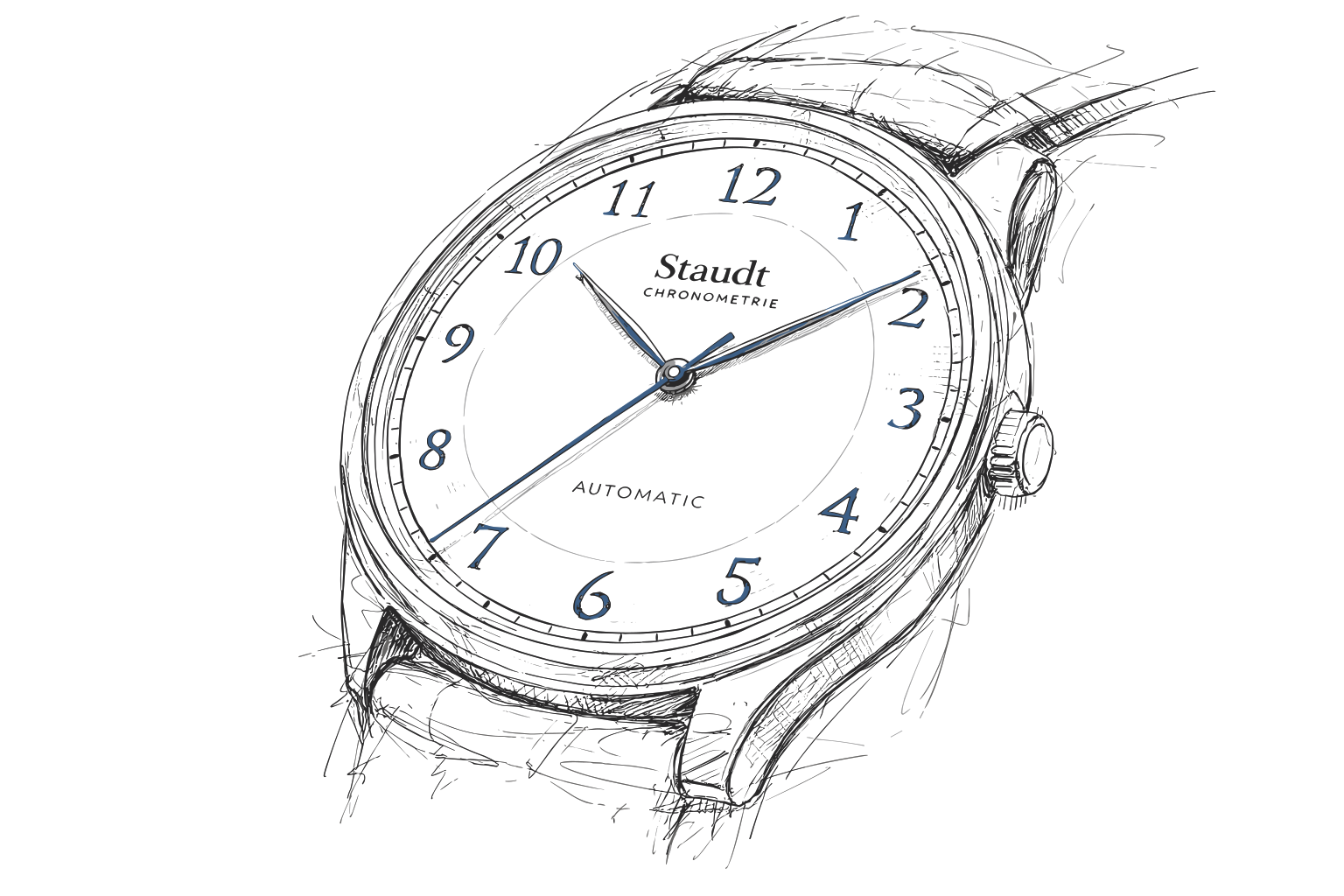
For us, designing is mostly leaving things out.
Not because a watch should feel empty, but because every detail should have a reason. The curve of the case, the distance between numerals, the length of the hands and the transition between polished and brushed surfaces all determine the calm of the watch.
Guilloché · by hand
A dial that takes three days.
Our guilloché dials are cut on a rose engine: a hand-operated machine from a time when precision still lived in the wrist. Each line is one continuous movement. One vibration too many, and the dial must be started again. Three days of work for a surface that only fully reveals itself when light falls across it at an angle.
Mechanics that continue to fascinate.
No battery. No notifications. No functions that will feel outdated tomorrow. Only springs, wheels, bridges, screws and the quiet regularity of a mechanical movement. Few things are more fascinating than a mechanism that keeps moving through tension, transfer and precision.We work with Swiss mechanical movements, but we do not simply use them as they arrive. Depending on the model, movements are finished again, adapted or combined with parts made specifically for Staudt. Not to show technique for its own sake, but to give the watch more character, beauty or functionality.

For those who take the time
Join the waiting list for the Staudt book.
One hundred and sixty pages about watches, delivered to your home free of charge. Not a PDF, not an email, but a book to keep. Leave your details and we will let you know when your copy is ready.
The story behind Staudt.
From a watch that could not be found anywhere to a Dutch brand: how Staudt began, and why we make watches the way we do.
Read the story →
True luxury is personal.
From engraved family crests to a watch made entirely to your wishes: a Staudt only truly becomes yours when it also tells something about you.
Discover the possibilities →Good to know
What does craftsmanship mean at Staudt?
For us, craftsmanship means attention in every step: from design and development to assembly, regulation and final control. A Staudt watch is the result of many small choices that together create calm, proportion and reliability.
Where are Staudt watches made?
Our watches are designed, developed and assembled in Ootmarsum, in the Netherlands. We work with Swiss mechanical movements, which depending on the model are finished, adapted or combined with parts made specifically for Staudt.
What is guilloché?
Guilloché is a traditional decorative technique in which fine patterns are cut into a dial. It creates depth, rhythm and a special play of light. At Staudt, guilloché is not decoration alone; it is a way to give calm more layers.
Does Staudt use Swiss movements?
Yes. Many Staudt watches are based on Swiss mechanical movements. For us, that is where the work begins. Depending on the model, movements are finished, adapted or combined with parts made specifically for Staudt.
Are Staudt watches made by hand?
A Staudt watch is assembled and checked by hand. Many visible details, such as fitting the hands, checking the finishing and bringing together the case, dial and movement, require handwork and attention.
Why does Staudt make watches in small numbers?
Small numbers create room for attention. They allow us to inspect each part more carefully, check every watch more precisely and stay closer to our own way of making.